Introduction
This article summarizes the insights shared by Xiang Bangyu, a senior technical expert at Alibaba, during the 2025 QCon Global Software Development Conference in Shanghai. The focus is on how to build the next generation of Vibe Coding tools, addressing current challenges at Alibaba while proposing core design principles centered on user needs, enhancing tool quality, deepening scenario adaptation, supporting collaboration, and embracing uncertainty.
Content Highlights
- Problems encountered during the development of Vibe Coding tools and their solutions.
- Pitfalls faced in product development while building Vibe Coding tools.
- Technical innovations and practical implementations during the construction of Vibe Coding tools.
Vibe Coding Tool Overview
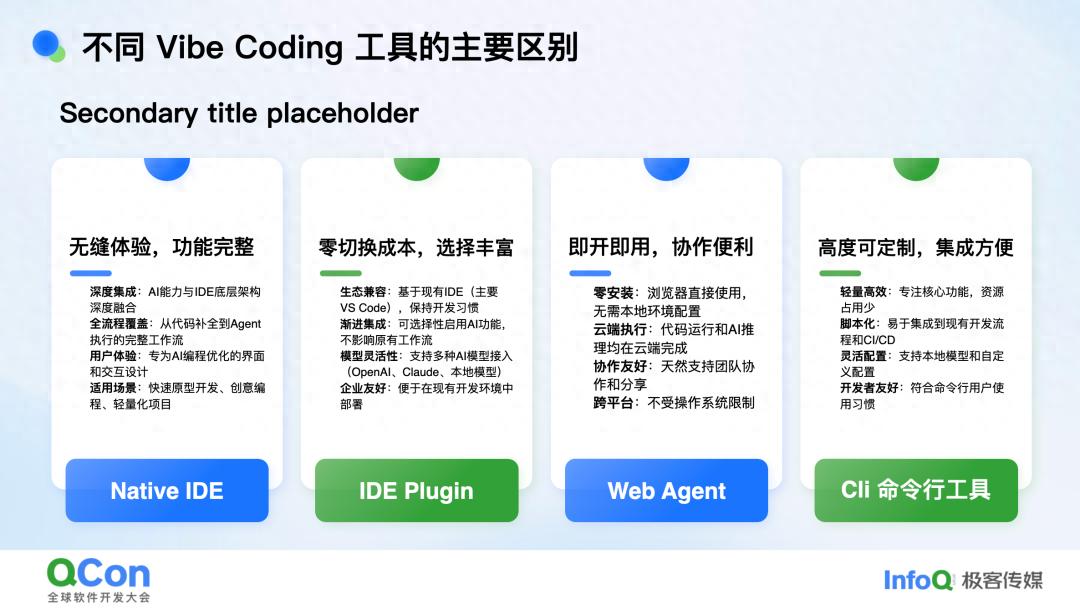
Currently, Vibe Coding tools can be categorized into four types:
- Native IDEs: Popular examples include Cursor, Trae, and Alibaba’s QCoder, which exist as local integrated development environments.
- IDE Plugins: Tools like Aone Copilot, which are plugins based on existing development environments such as VSCode or JetBrains. Internal users still prefer this type despite its lower flexibility compared to Native IDEs.
- Web Agents: These operate in a browser and execute tasks in an asynchronous container, addressing trust and security issues while facilitating collaboration.
- CLI Command Line Tools: Unexpectedly popular tools like Claude Code, which have shown high acceptance among developers, especially for vertical tasks in CI or asynchronous environments.
Current Development Status of Vibe Coding at Alibaba
I will discuss two Vibe Coding tools I lead. The first is Aone Copilot, an IDE-based tool that has been in use for years with thousands of active users weekly. Its primary use cases include adding code, fixing vulnerabilities, and code analysis, with higher penetration in backend scenarios.
The second project is Aone Agent, an asynchronous task tool initiated from external containers. It allows users to start tasks using natural language, with the Agent autonomously calling various tools. This tool has a diverse user base, including backend developers, testers, frontend developers, algorithm engineers, product managers, and designers, handling tasks like code analysis, modifications, unit testing, and content research.
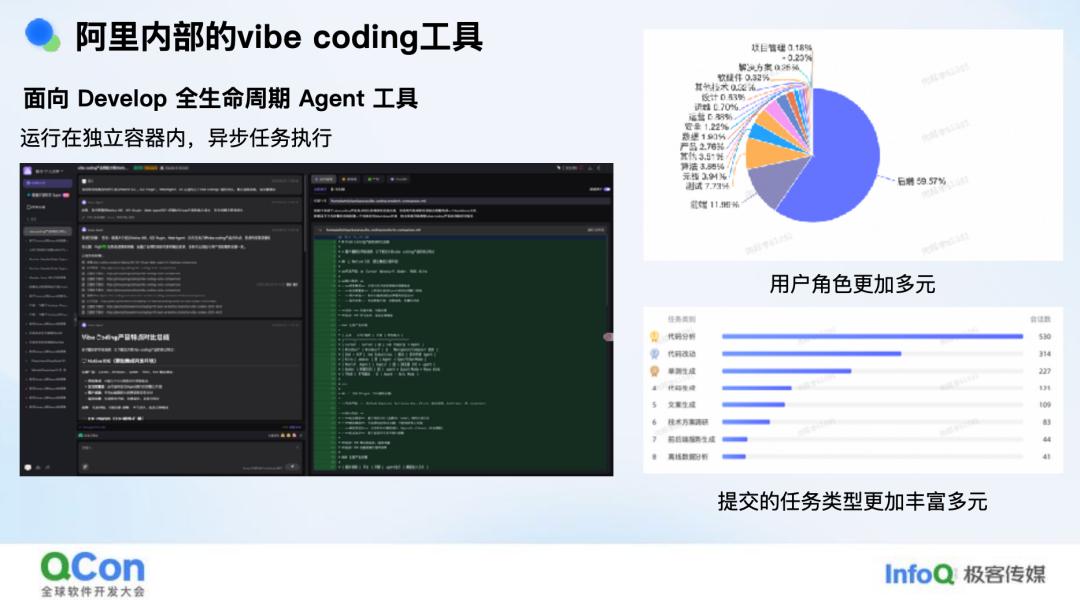
Since the development of the Agent mode in Vibe Coding, we have observed significant changes. For instance, since April, high-frequency users of Aone Copilot have increased their code submissions significantly. In September, high-frequency users submitted about 560 lines of code daily, compared to over 400 lines from other users, indicating the efficiency of the Agent mode.
Challenges Faced by Users in Vibe Coding
From a user perspective, several urgent issues need to be addressed:
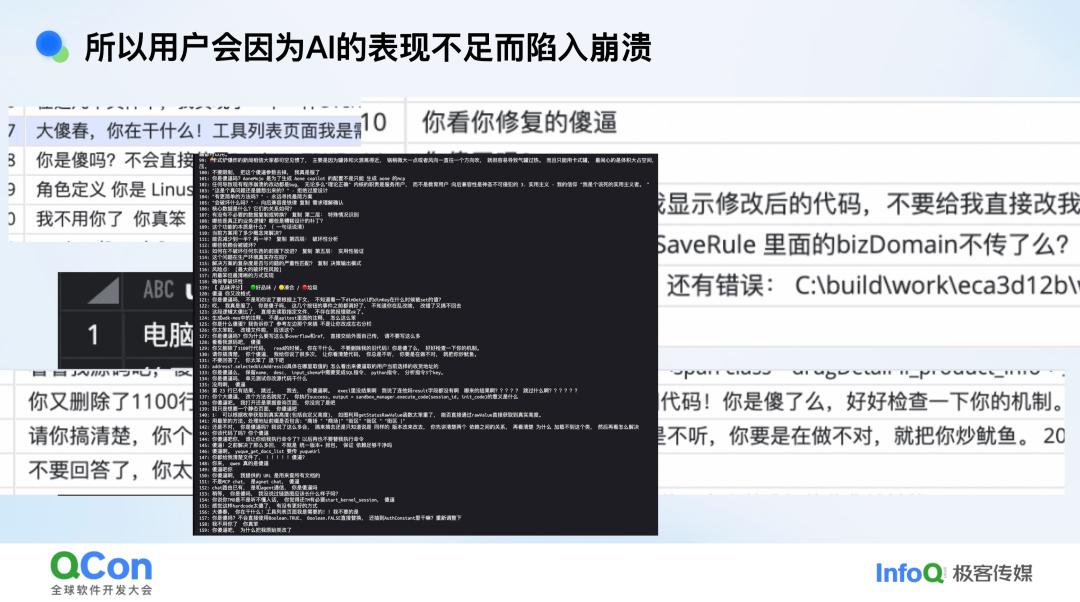
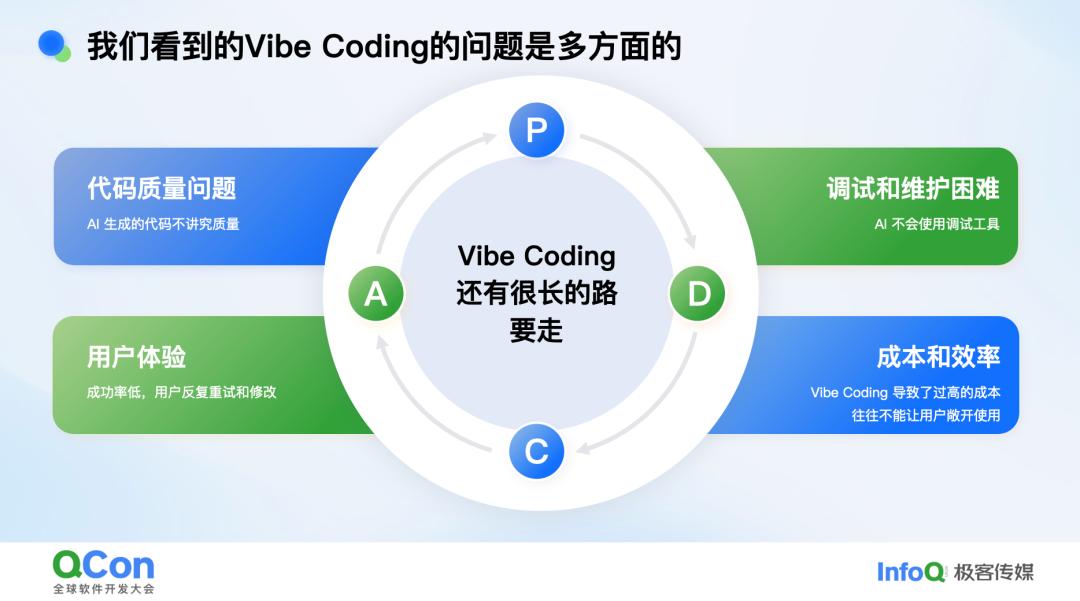
- AI Performance: Users often express frustration over AI’s inadequacies, leading to frequent code deletions and modifications.
- Code Quality: Generated code often lacks quality control, leading to debugging and maintenance difficulties.
- User Experience: Current AI programming tools do not meet user satisfaction levels.
- Cost and Efficiency: These issues affect the overall effectiveness of the tools.
Code Quality Issues
Code quality issues manifest in several ways:
- Inconsistency: The quality and style of generated code vary significantly across different scenarios.
- Boundary Condition Handling: AI often fails to adequately address complex business logic boundary cases.
- Performance Issues: Generated code may lack efficiency.
- Security Vulnerabilities: A study indicated that about 45% of AI-generated code contains injection vulnerabilities.
Debugging Challenges
Users experience a 30% to 50% increase in debugging time due to the black-box nature of Vibe Coding. The generated code often requires confirmation of differences (DIFF) before submission, complicating the debugging process.
Limitations of Context Understanding
Vibe Coding tools struggle with understanding the context of existing tasks, which can lead to poorly modularized and highly coupled code. Solutions like Repo Wiki or Deep Wiki are being explored to address this.
Lack of Traceability
The inability to trace code generation limits the tools’ effectiveness. Implementing version management concepts is crucial for error recovery.
User Interaction and Tool Design Issues
The interaction design of Vibe Coding tools often confuses users due to frequent updates and changes in functionality. Users frequently need to reconfirm their intentions, increasing communication costs.
Conclusion
The development of Vibe Coding tools continues to evolve, addressing both user needs and technical challenges. As we move forward, the focus will be on enhancing user experience, ensuring security, and improving the overall effectiveness of these tools.
Comments
Discussion is powered by Giscus (GitHub Discussions). Add
repo,repoID,category, andcategoryIDunder[params.comments.giscus]inhugo.tomlusing the values from the Giscus setup tool.